
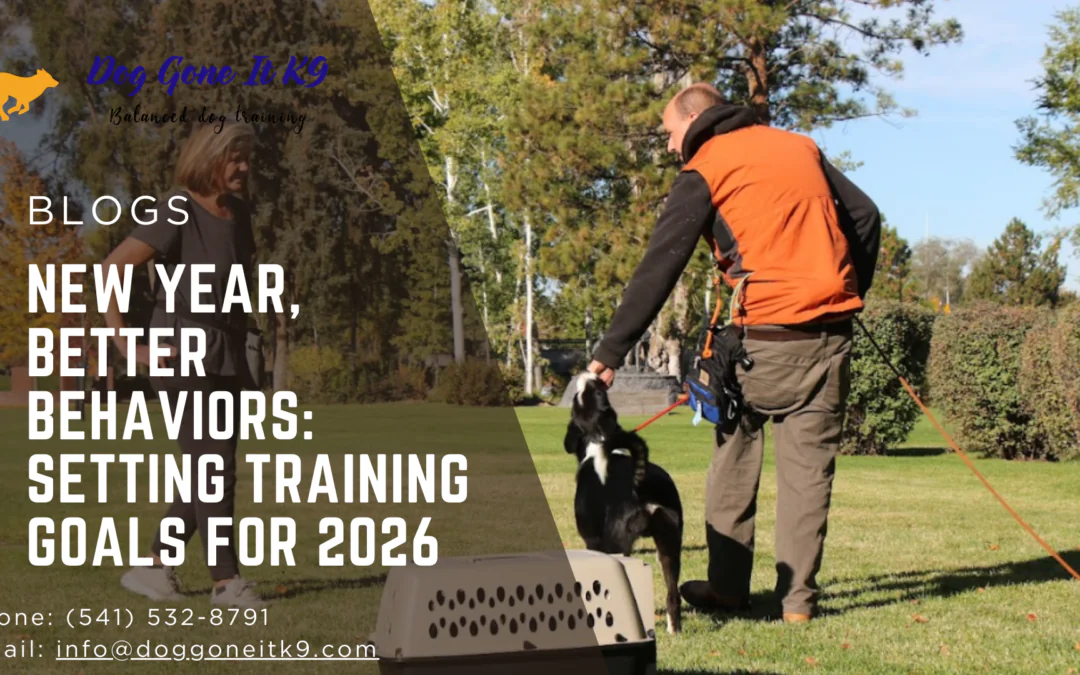
The start of a new year is a natural time to reflect, reset, and refocus. For dog owners, it is also the perfect opportunity to look at training progress and set thoughtful goals for the year ahead. Training is not about perfection. It is about consistency, understanding, and building habits that support better behavior over time.
At Dog Gone It K9 LLC, we believe clear goals create confident dogs and calmer households. As you move into 2026, taking a structured approach to dog training goals can help you build momentum that lasts well beyond January.
Reflecting on Your Dog’s Progress
How has your dog grown over the past year?
Before setting new training goals, it is important to reflect on where your dog is right now. Think about the behaviors that have improved, the challenges that still show up, and the situations where your dog feels most confident or most stressed.
Progress does not always look dramatic. Small wins like improved leash manners, faster response times, or calmer behavior around guests matter. Acknowledging growth helps you set realistic expectations and prevents frustration. Reflection also gives you clarity on what your dog truly needs next in their training journey.
Common Resolutions for Better Behavior
What behaviors do you want to improve in the new year?
Many dog owners start the year with similar training goals. These often include walking politely on leash, reducing jumping or barking, improving recall, or building calm behavior around distractions. While these goals are common, the approach should never be generic.
Better behavior comes from understanding why a behavior exists, not just trying to stop it. Training goals should focus on teaching your dog what to do instead of only correcting unwanted actions. Clear communication, structure, and consistency are what make resolutions stick long term.
How to Set Realistic Training Goals
What does success actually look like for your dog?
Realistic goals are specific, measurable, and achievable within your dog’s abilities and lifestyle. Instead of aiming for perfect obedience, focus on functional behavior that improves daily life. For example, a goal like calmer greetings or focused walks is easier to track and far more meaningful.
Training goals should also match your schedule and energy. Short, consistent sessions are more effective than long, infrequent ones. When goals feel manageable, you are more likely to stay consistent, and your dog is more likely to succeed.
Tracking Progress Week by Week
How can you tell if your training is working?
Tracking progress helps turn effort into results. Weekly check ins allow you to notice patterns, improvements, and setbacks without judgment. Keep notes on what worked, what felt challenging, and how your dog responded to different environments or cues.
Progress is rarely linear. Some weeks will feel easier than others, and that is normal. Tracking helps you stay objective and adjust your approach when needed. It also reinforces consistency, which is one of the most important elements of effective dog training.
Building Momentum for Long Term Success
How do you keep training from fading after January?
Momentum comes from routines, not motivation. When training becomes part of everyday life, it stops feeling like a chore. Integrating training into walks, play, and daily interactions helps reinforce behaviors naturally and keeps your dog engaged.
Long term success also depends on mindset. Training is a relationship, not a checklist. When you focus on communication, trust, and clear expectations, progress continues even when challenges arise. Every season becomes an opportunity to strengthen your bond.
Want a Clearer Training Roadmap for the Year Ahead?
If setting training goals feels overwhelming or inconsistent, our upcoming book is designed to help. We are currently developing a science-backed guide that explains how dogs actually learn, why balanced training works, and how to apply these principles clearly in everyday life.
This book is built for dog owners who want clarity, structure, and confidence instead of guesswork.
📖 Join the presale list to receive early access, exclusive updates, and be the first to know when the book launches:
👉 https://doggoneitk9.com/dog-trainers-prineville-oregon/dog-trainers-playbook-volume-1-by-tom-lanbone-sr/
Ready to Start 2026 With Clearer Training Goals?
A new year is the perfect time to build better habits, stronger communication, and lasting behavior changes with your dog. At Dog Gone It K9 LLC, we help dog owners create realistic training plans rooted in structure, understanding, and balanced techniques. If you are ready to move forward with confidence and clarity, reach out today to schedule a consultation and take the first step toward better behavior in 2026.